
Rug Wool Cones for Tufting | 100% New Zealand Wool
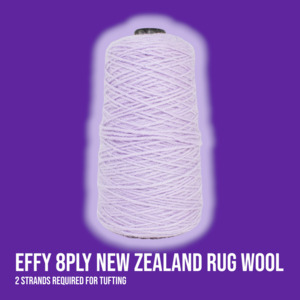
100% Pure New Zealand Romney Rug Wool is designed for tufting machines, manual rug-making, tools, punch needling, and other rug-making techniques.
This rug wool has been specifically developed for rug making. Rug wool is much stronger and more durable than regular knitting yarns, allowing you to create rugs that can withstand foot traffic and last for many years.
Unlike acrylic and cotton-blend yarns, rugs made with true rug wool will not compress and lose their shape over time. The fibres naturally bounce back, helping your rug maintain its structure and texture.
If you want to make a long-lasting rug that can be walked on and enjoyed for years, 100% rug wool is the best choice.
Despite its strength, rug wool is not harsh underfoot. It feels soft, lush, and resilient. I have several rugs made from this wool in my own home, and visitors often comment on how soft, squishy, and luxurious they feel.
The yarn comes wound on recycled plastic cones so it feeds smoothly into your tufting machine.
This rug wool is approximately double-knit thickness. For most tufting guns we recommend using two strands to achieve a nice dense finish. This usually means two cones per colour, however many tufters split a cone into a cone and a yarn cake using a yarn winder when they only need a small amount of an accent colour.
I do my best to represent the colours as clearly as possible, but please keep in mind that different screens and lighting can affect how colours appear. Photos showing colours together are included to help you understand the shades more accurately. 📦 Features
- 500 g per cone (1.1 lb)
- Approx. 500 m per cone (1 m ≈ 1 g)
- 100% moth-proofed wool
- Hand wash; dry flat
- 100% New Zealand wool
- Recycled plastic cones for easy feeding 📐 Specifications
- 837/3 Tex
- 36–38 Micron
Yarn Production Notice: Yarn is a textile product and natural variations occur during manufacturing. Cone weights may fluctuate slightly (approximately ±5–10%) due to fibre density, humidity, and winding tension. This is standard within the textile industry and does not affect performance or quality. Pricing reflects the average batch yield, so customers are not financially disadvantaged by minor weight differences.
Colours may vary slightly between dye lots. We recommend purchasing enough yarn for your project at one time, as future stock cannot be guaranteed to match the same dye lot. 🌏 Why New Zealand Wool?
The vast fields and mountains of New Zealand are home to millions of sheep, producing some of the highest quality wool in the world. This is why New Zealand is among the leading producers in the global wool industry.
New Zealand wool is known for being naturally white, which allows for exceptional colour depth when dyed. This makes it possible to achieve clean pastel shades as well as deep, rich blacks.
New Zealand wool is also 100% natural and renewable. Each sheep grows a new fleece every year. Regular shearing is essential for maintaining the health of the animals — without it sheep can develop a serious condition called flystrike.
At least once per year, growers bring their herds into the wool shed to be shorn. The rest of the year sheep roam freely across New Zealand’s open landscapes.
During my time living in New Zealand, I saw firsthand how devoted wool growers are to maintaining a stress-free life for their animals and protecting the surrounding ecosystem.
Many farmers participate in the New Zealand Farm Assurance Programme, which guarantees high standards of animal welfare. Farmers also rely on specially trained working dogs to gently guide sheep between pastures and into the wool shed. These dogs are part of the farming family and thrive doing the work they were bred for.
New Zealand wool is biodegradable, recyclable, and naturally resilient. The fibres bounce back under pressure, reducing flattening and wear in rugs.
The surface of a wool rug also acts as a natural air filter, trapping dust particles and pollen that can easily be vacuumed away.
Wool fibres can resist temperatures up to around 700°C and will self-extinguish once the source of flame is removed.
The soft yet durable fibres also absorb sound, helping create calm and comfortable spaces.
Wool naturally regulates temperature — keeping spaces warm in winter but cool in summer.
The unique environment and genetics of New Zealand sheep produce fibres that are both durable and soft, with deeper colour saturation than many other wool types.