
Compostable Dog Poop Bags - 5 Rolls
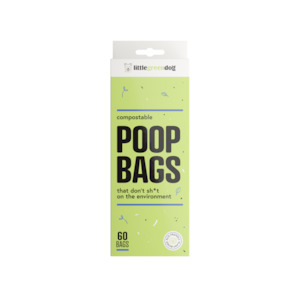
Little Green Dog believes in showing our Earth the same love and care we show our fur kids. Long story short: most of those biodegradable bags you see on shelves aren’t environmentally friendly at all. Instead, they’re made of plastic — with additives that break down the big chunks of packaging but leave behind microplastics that ruin our planet. Little Green Dog provides New Zealand dog owners with a truly green alternative: fully biodegradable, 100%-compostable, plant-based, compostable poop bags so you can clean up after your pup without sh tting on the environment.
5-pack - designed for the once-a-day pooper. This pack contains 60 plant-based, compostable poop bags that’ll provide you with two months of environmentally friendly peace of mind.
- Extra strong & extra thick
- Leak proof & large (32cm x 22cm)
- 5 rolls (60 bags - fit into most standard poop bag holders)
- Plant based and will not degrade into microplastics
- Home compost certified
- Home grown business
About being biodegradable Here's a quick rundown of the three different standards of bag you can find in most stores: First, the pure plastic ones. Low-cost bags that destroy our oceans and wildlife are not the ideal dog accessories. Don't use these. It takes 1,000 years for a plastic bag to degrade in a landfill!
Next are 'biodegradable' bags - or only 'degradable'. As it turns out, a bag which degrades in 1000 years from now is somewhat degradable right? So it gets printed on the bags for us to believe we are doing the right thing. For most providers in New Zealand, 'biodegradable' means plastic with added cornstarch, which breaks down in a few months and leaves behind microplastics. These micro plastics absorb toxins and continue to pollute the environment. Not very green at all.
Lastly there are the 'compostable' bags. We've got two standard outdoor dog products: American and European. Little Green Dog went for the higher EN 13432 European option for their poop bags:
- After 12 weeks, no more than 10% of remaining material fragments are larger than 2mm.
- Within 6 months max, biodegradation (the conversion of the packaging into water, carbon dioxide, and new cell biomass) generates an amount of carbon dioxide that's at least 90% as much as the carbon dioxide given off from the reference material.
- Low levels of heavy metals
- No negative effect on the composting process: The composted packaging has no adverse effect on the bulk density, pH, salinity (electrical conductivity), volatile solids, total nitrogen, total phosphorus, total magnesium, total potassium, and ammonium nitrogen characteristics of the compost.