
Yellow Clown Goby
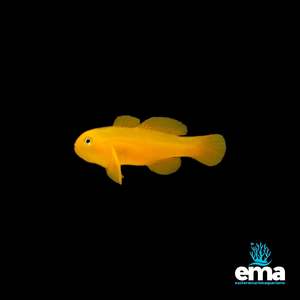
The a cheerful addition to any marine aquarium. In addition to its vibrant body color, the active and peaceful often seen perched on live rock or coral right out in the open or hovering in the water column in plain view for hobbyists to enjoy. Though the adult size is a mere 1-1/2" in length, the stocky shape and very large head gives the a quiet, yet commanding presence in the home aquarium.
Native to the reefs of the Indo-Pacific, Gobiodon okinawae usually congregates among soft and hard coral colonies. Since the peaceful, it makes a wonderful addition to any reef aquarium containing colonies of polyp corals. Here, this member of the Gobiidae family will swim and perch amongst the polyps. Care needs to be taken, however, with SPS corals since the may nip at the smaller polyps.
For the best care, house single specimens in a 10 gallon or larger aquarium, preferably with branching coral to best recreate the natural habitat of the. It will rarely demonstrate aggression towards other fish, but will fight with its own kind especially in smaller aquarium systems. Therefore, it is best to keep the with other docile species.
It is common for the to spawn in an aquarium. Caution should be exercised if the aquarium contains Acropora sp. or similar SPS corals. The female will lay her eggs on the underside of the coral's branch, which will cause tissue recession in that area of the coral. However, under good conditions, the coral will regenerate the lost tissue.
The 's diet should consist of a variety of brine shrimp, frozen mysis shrimp, table shrimp, and frozen food preparations for carnivores.
Source: Live Aquaria
0
0
Native to the reefs of the Indo-Pacific, Gobiodon okinawae usually congregates among soft and hard coral colonies. Since the peaceful, it makes a wonderful addition to any reef aquarium containing colonies of polyp corals. Here, this member of the Gobiidae family will swim and perch amongst the polyps. Care needs to be taken, however, with SPS corals since the may nip at the smaller polyps.
For the best care, house single specimens in a 10 gallon or larger aquarium, preferably with branching coral to best recreate the natural habitat of the. It will rarely demonstrate aggression towards other fish, but will fight with its own kind especially in smaller aquarium systems. Therefore, it is best to keep the with other docile species.
It is common for the to spawn in an aquarium. Caution should be exercised if the aquarium contains Acropora sp. or similar SPS corals. The female will lay her eggs on the underside of the coral's branch, which will cause tissue recession in that area of the coral. However, under good conditions, the coral will regenerate the lost tissue.
The 's diet should consist of a variety of brine shrimp, frozen mysis shrimp, table shrimp, and frozen food preparations for carnivores.
Source: Live Aquaria
×