
Garlic Sampler Bundle – Artichoke, Elephant & Printanor
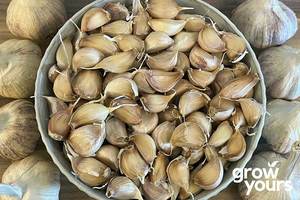
Garlic is a heavy feeder that enjoys full sun and requires fertile soil to perform at its best and produce big fat bulbs. That means in order to get the best results from your garlic patch it should be planted in well-fertilised free draining soil.
We recommend preparing your garden beds in advance of planting by generously adding lots of organic matter such as aged compost, potting mix, and/or manure a few weeks in advance of sowing your garlic. A layer of mulch on top of your garden bed is also great for insulating the developing garlic bulbs from extreme temperature changes over the growing season.
If you have access to lots of free organic matter from your yard such as a compost bin or dropped leaves that's perfect for layering generously in the garden for your garlic. If you haven't found it easy to add heaps of organic matter to your garlic growing beds then a trick employed by large commercial growers is to dig or trench down 200-300mm at planting time and add sheep pellets or guano or bone flour to the bottom of the hole/trench at a rate of roughly 100g per lineal metre (a small handful each hole).
Garlic needs lots of balanced nutrients throughout the growing season including at the very end of the season when it fattens up the bulbs.
The biggest and fattest cloves around the outside of your garlic bulb will typically produce the best plants. Many people simply eat the smaller inner cloves but they can be planted too. Aim to sow your cloves asap once they are broken apart from their bulbs, as this process breaks their dormancy and they also will begin to dehydrate once broken apart.
Adequate spacing appears to be one of the simplest methods for dealing with rust, as plants spaced closely together can be devastated much more easily.
Garlic can be sown from April – August in New Zealand. Traditionally garlic was sown on the shortest day of the year in June and harvested on the longest day of the year in December, but the current trend is to plant slightly earlier in an effort to beat the arrival on rust in spring.
If birds or other animals are prone to disturbing your freshly sown garlic cloves, cover with netting or wire mesh until the cloves have put up their green shoots a few weeks later.
It’s ready to harvest when the tips of the leaves begin to yellow and the base of the stem goes soft. About a month before harvest you should reduce watering to improve the keeping quality of your garlic and help the bulbs focus on swelling.
- Store:
- Grow Yours
- Price:
- $23