
PABA 500mg
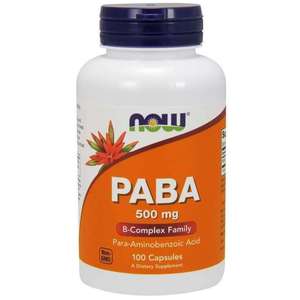
PABA (Para-Aminobenzoic Acid) is found in food such as grains, eggs, milk and meat. It is a precursor of folic acid and may be used by our gut microbiota to produce folic acid. PABA may also help cells combat oxidative stress.
Benefits
- Para-Aminobenzoic Acid
- Supports production of folic acid
- May support healthy skin and hair Ingredients
PABA (Para-Aminobenzoic Acid) 500 mg
Other Ingredients:
Gelatin (Capsule), Stearic Acid (vegetable source), Silica and Magnesium Stearate (vegetable source).
Not manufactured with wheat, gluten, soy, milk, egg, fish, shellfish or tree nut ingredients. Produced in a GMP facility that processes other ingredients containing these allergens. Dosage
Take 1 capsule daily, preferably with food. Precautions
For adults only. PABA should not be taken when using sulfonamide (sulfa) drugs or in known PABA allergy. Consult physician if pregnant/nursing, taking medication, or have a medical condition including liver and renal disease. Keep out of reach of children. More Information
contains para-aminobenzoic acid, usually shortened to PABA. PABA is a compound related to the B-vitamin family and is commonly discussed for its role in folate production by gut bacteria. It is also often used in supplements aimed at skin and hair support.
Because PABA is the only active ingredient here, the product is straightforward and quite specific. It is not a general multivitamin. The main reasons people look at PABA are skin, hair and the nutrient pathway link with folic acid production. FAQ
What does contain?
It contains 500 mg of para-aminobenzoic acid, or PABA, per capsule. There are no other active nutrients in the formula.
What is PABA commonly used for?
PABA is commonly used in supplements for skin and hair support. It is also known as a precursor involved in folic acid production by gut bacteria.
What should I know before buying ?
It is a very specific ingredient rather than an all-purpose vitamin. If PABA is the nutrient you already want, this keeps the formula simple.
Is PABA the same as folic acid?
No. PABA is not folic acid itself, but it is related to folate pathways and is sometimes discussed in that context.