
Principles
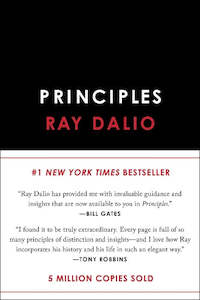
by Ray Dalio is a compelling read that offers a detailed blueprint for achieving unparalleled success in both personal life and the business realm. This #1 New York Times bestseller, with over 5 million copies sold, brings into focus the unconventional yet highly effective principles that have guided Dalio through his illustrious career.
Ray Dalio, one of the world's most successful investors and entrepreneurs, founded Bridgewater Associates in 1975 from a modest two-bedroom apartment in New York City. Four decades later, Bridgewater has not only ascended to the pinnacle of the hedge fund industry by generating the highest earnings for its clients but also earned recognition as the fifth most important private company in the United States, according to Fortune magazine. Dalio himself has been honoured as one of the 100 most influential people in the world by Time magazine.
The heart of lies in Dalio's realization and development of a set of distinctive principles that fostered Bridgewater's exceptional culture. He characterizes this culture as an "idea meritocracy" where meaningful work and relationships are pursued through radical transparency. This approach helped Bridgewater scale new heights, achieving remarkable success and innovation. Dalio firmly believes that these principles, rather than any inherent personal traits, are the cornerstone of his accomplishments.
a treasure trove of insights where Dalio distils the essence of what he has gleaned over his remarkable career. He posits that life, management, economics, and investing can be understood as systematic rules—like machines. The book is enriched with hundreds of practical lessons based on the cornerstones of "radical truth" and "radical transparency." Dalio meticulously outlines the most efficient ways for individuals and organizations to make decisions, confront challenges, and establish robust teams.
Key highlights of the book include Dalio’s description of innovative tools employed at Bridgewater to foster an idea meritocracy. For instance, he discusses the use of "baseball cards" for employees, which encapsulate their strengths and weaknesses, and the implementation of computerized decision-making systems that facilitate believability-weighted decisions. These systematic approaches are indicative of Dalio's unique operational outlook that has propelled Bridgewater to unrivalled success.
While offers a wealth of novel ideas for organizations and institutions, it also provides a clear, straightforward approach to decision-making, applicable to anyone regardless of their personal or professional goals. The book equips readers with the ability to systemize their decision-making process, encouraging a methodical and principled approach to achieving their objectives.
Described as both "the Steve Jobs of investing" and "the philosopher king of the financial universe" (CIO magazine), Ray Dalio provides readers with an extraordinary opportunity to glean proven and insightful advice. This is a rare find beyond the conventional business literature, making an indispensable guide for anyone keen on unlocking their potential and achieving remarkable results.