
Phytology Plant Water Drops - 50ml
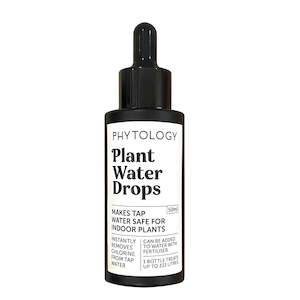
Chlorine is hard to get away from if you're a plant. As such a tiny amount of chlorine is necessary for plants, an excess is far more likely than a deficiency. That's because chlorine is almost everywhere. In the form of chlorides in their soil, in fertiliser, and especially in tap water. Protect your plants with Plant Water Drops, the instant solution to make tap water safe for your plants by removing chlorine.
💀 Chlorine: The sneaky plant killer
Chlorine can be sneaky. Yes, chlorine can cause immediate harm to plants if chlorine levels are high, or a plant is sensitive to chlorine (check the plant list below). But for most plants, chlorine can sneak up on them slowly.
It can slowly build up in soil, extra added every time you fertilise, even more added every time you use tap water. By the time you eventually see the symptoms, you'd be forgiven for thinking it can't be from your water, since you've been using tap water all this time without any problems. Until now.
You can't do much to control what's naturally in your plant's substrate (plus remember plants do need tiny amounts), but you can choose a chlorine-free fertiliser, and if collecting rainwater isn't an option, you can now remove chlorine from your tap water instantly with Phytology Plant Water Drops.
🪴 Which plants are sensitive to chlorine?
Some of the more chlorine-sensitive indoor plants include:
Peace Lily, Maranta, Calathea, Stromanthe and other Prayer Plants, Orchid, Fern, African Violet, some Begonia, Spider Plant, Parlour Palm, Yucca, Carnivorous Plants such as Pinguicula, Snake Plants and other Dracaenas.
Although ALL indoor plants are sensitive to too much chlorine, these are some that can be harmed at lower levels that other plants might tolerate (at least until levels start to build-up).
What are the signs of chlorine toxicity in plants?
🍃 FOLIAGE
Look out for brown leaf tips, scorched leaves and brown leaf edges, often with a yellow halo, older leaves turning yellow, wilting and leaf drop as the leaves eventually die, one by one. Harder to diagnose is slow or stunted growth and a general failure to thrive.
And that's just some of what you CAN see..
🪴 ROOTS
.what you can't see is the harm excess chlorine can cause to your plants delicate roots BEFORE the visible signs appear above-ground. Excess chlorine can damage roots cells, reduce uptake of essential nutrients and water, and eventually cause root death.
🌱SOIL
Soil health often gets overlooked when talking about chlorine harming plants. There is a symbiotic relationship between plants and the good bacteria in their soil.
One of the benefits of these invisible soil super-heroes is to make nutrients more bioavailable to plants. But chlorine kills those good bacteria, blocking plants from getting all the essential nutrients they need.
Even if you don't see physical signs of injury above the surface, each time you water with chlorinated tap water, you kill the beneficial microorganisms that help take care of your plant.
💧 Instantly remove chlorine from tap water
3, 2, 1. Plant Water Drops instantly removes chlorine to make your water safe for your plants. And a little goes a looong way. Just 3 drops to 1 litre water is all it takes, so this 100ml bottle treats up to 333 litres! That's just 3 cents per litre (fertiliser averages around 7 to 18 cents per litre).
And yes, you CAN add fertiliser to the same water. Remove the chlorine first, add your fertiliser (no wait time required in-between), and you're ready to water immediately.
PS: Even if you're a heavy waterer like I am, with one medium plant getting around half a litre each time I water, this little 100ml bottle will water over 660 plants!
🫗 Fertiliser-friendly
Unlike some chlorine removers (made for fish), Plant Water Drops are fertiliser friendly. Plant Water Drops remove chlorine without removing the minerals from your fertiliser.
Now you can take out the chlorine and add your fertiliser all in the same water and just get on with giving your plants only what they need, and nothing they don't.
💧 Is chlorine the only reason for brown leaf tips?
Unfortunately chlorine is only one possible cause of brown leaf tips. Fertiliser, low-humidity (dry air), under- or over-watering are other common causes