
Red eared Slider Turtles
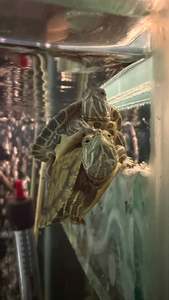
Red-eared sliders grow much larger than most people expect.
Minimum Tank Size
• Juvenile: 100L
• Adult female: 350–500L
• Rule: 10 gallons (≈40L) per 1 inch of shell length
Larger is always better.
Tank Requirements
• Strong external canister filter (rated for 2–3x tank size)
• Fully dry basking platform
• Secure lid (excellent climbers)
Outdoor ponds are suitable in warmer months but must be fully escape-proof and predator-proof.
💧 Filtration & Water Quality
These turtles are messy and produce significant waste.
• Use powerful external filtration
• Partial water changes weekly (25–30%)
• Dechlorinate tap water
• Monitor ammonia, nitrite, and nitrate
• Keep water clear and odour-free
Poor water quality is the #1 cause of health issues.
🌿 Diet
Red-eared sliders are omnivores.
Juveniles (more protein-heavy)
• Quality turtle pellets (main diet)
• Earthworms
• Bloodworms
• Insects
Adults (more plant-based)
• Turtle pellets (50%)
• Dark leafy greens:
- Dandelion
- Endive
- Bok choy
- Collard greens
- Silverbeet (moderation)
• Aquatic plants (when safe)
❌ Avoid
• Processed human food
• Dog or cat food
• Excess fruit
• Iceberg lettuce
Supplements
• Calcium supplement 2–3 times weekly
• Cuttlebone in tank (optional extra calcium source)
🏝️ Basking Area
Essential for proper shell drying and health.
• Completely dry platform
• Easy ramp access
• Large enough for full body stretch
• Positioned directly under heat & UVB
Turtles must be able to fully exit the water to dry off.
🐢 Behaviour & Handling
• Intelligent and active
• Strong swimmers
• Can become food-focused and interactive
Handle minimally.
Always wash hands before and after handling (salmonella risk).
❤️ Lifespan
With proper care:
• 20–40 years
• Some live even longer
They are a long-term commitment and require significant space as adults.
🧼 Cleaning & Hygiene
• Remove leftover food daily
• Spot clean debris
• Weekly partial water change
• Clean filter media regularly
• Full tank clean as needed (not with harsh chemicals)
🧪 Health Warning Signs
Contact a reptile vet if you notice:
• Soft shell
• Swollen eyes
• Wheezing or bubbles from nose
• Floating unevenly
• Not eating for several days
• White patches or shell rot
📝 Summary Cheat Sheet
• Water: 24–26°C (juvenile), 22–24°C (adult)
• Basking: 30–35°C
• UVB: 10–12% T5 tube, 30–40 cm above, 10–12 hrs/day
• Tank: 200L juvenile, 350–500L adult
• Diet: Pellets greens, balanced omnivore
• Lifespan: 20–40 years
- Store:
- Paws And Claws Manawatu
- Price:
- $99.99