
Black Emperor Tetra
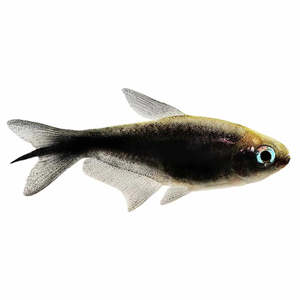
The a striking and elegant freshwater fish known for its deep dark body tones, iridescent highlights, and distinctive extended finnage in males. A slightly more assertive tetra species, s display fascinating social behaviour and are best kept in well-structured groups within spacious community aquariums.
When housed correctly, males develop intense coloration and graceful fin extensions, making this species a standout choice for planted aquariums and aquascapes. Physical Characteristics
Adult Size: Approximately 4–5 cm (1.5–2 inches)
Coloration: Dark charcoal to black body with subtle blue or purple iridescence; lighter underbelly
Body Shape: Slender, elongated tetra profile
Sexual Dimorphism:
Males develop longer dorsal and caudal fin extensions
Females are slightly larger and rounder with subtler colouration Behaviour & Temperament
Temperament: Semi-peaceful
Tank Level: Mid-water
Schooling Behaviour: Should be kept in groups of 6 or more
Activity Level: Males establish dominance hierarchies but rarely cause harm when properly grouped Suitable Tank Mates
Other medium-sized tetras
Rasboras
Corydoras catfish
Dwarf cichlids (peaceful species, Bolivian Rams)
Small gouramis
Catfish
Avoid:
Very small or timid fish
Aggressive or highly territorial species
Fin-nippers Breeding Information
Spawning Type: Egg scatterer
Breeding Setup:
Soft, slightly acidic water
Fine-leaved plants or spawning mops
Parental Care: None
Notes: Adults may eat eggs; removal is required for breeding attempts Special Considerations
Mild male aggression can occur in small groups
Best colour achieved with stable water quality and subdued lighting
Prefers planted aquariums with visual breaks
Avoid overcrowding to reduce stress Aquarium Requirements
Minimum Tank Size: 60-80 litres
Water Temperature: 22–28°C
pH Range: 5.5–7.5
Water Hardness: 2–10 dGH
Substrate: Sand or fine gravel
Decor: Live plants, driftwood, shaded areas
Filtration: Moderate, well-maintained
Lighting: Moderate; plants help diffuse brightness Diet & Feeding
Diet Type: Omnivore
Recommended Foods:
High-quality flakes or micro pellets
Frozen foods such as daphnia and brine shrimp
Occasional live foods for conditioning
Feeding Frequency: Once or twice daily in small portions
We aim to provide up to date including ingredients, size and colour specifications, packaging and product features, as provided to us by the product manufacturer. As change from time to time, this information is intended as a guide only and some delay may occur in the updating of our listing. Product images are indicative of the appearance and the product delivered may vary slightly from the product image show. When precise information is important, we recommend that you read the label on the products you purchase or contact the manufacturer of the product.