
Congo Tetra
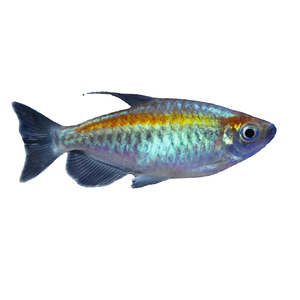
The (Phenacogrammus interruptus) is a large, elegant freshwater tetra renowned for its shimmering rainbow colours and flowing fins. Native to the Congo River Basin in Africa, this species brings movement, colour, and presence to larger community aquariums.
s are peaceful but active schooling fish that display their best colouration and behaviour in spacious, well-maintained aquariums. When kept in proper groups with compatible tank mates, males develop stunning iridescent hues and extended fin rays that make this species a true centrepiece fish. Physical Characteristics
Adult Size: Approximately 7–9 cm (3–3.5 inches)
Coloration: Iridescent blue, green, gold, and violet tones with translucent fins; males display longer, flowing fin extensions
Body Shape: Slender, elongated tetra profile
Sexual Dimorphism:
Males are larger, more colourful, and develop extended dorsal and caudal fin rays
Females are smaller with shorter fins and softer coloration Behaviour & Temperament
Temperament: Peaceful
Tank Level: Mid to upper water column
Schooling Behaviour: Should be kept in groups of 6 or more
Activity Level: Active swimmer Suitable Tank Mates
Other peaceful medium to large tetras
Corydoras and larger catfish
Peaceful cichlids
Gouramis
Rainbowfish
Avoid:
Fin-nipping species
Very small or timid fish
Aggressive or highly territorial species Breeding Information
Spawning Type: Egg scatterer
Breeding Setup:
Soft, slightly acidic water
Dense plants or spawning mops
Parental Care: None
Notes: Adults may eat eggs; separation required for breeding attempts Special Considerations
Requires ample swimming space
Best colouration achieved with stable water quality and subdued lighting
Flowing fins may attract fin-nippers
Sensitive to poor water conditions compared to smaller tetras Aquarium Requirements
Minimum Tank Size: 150 litres
Water Temperature: 22–28°C
pH Range: 6.0–7.5
Water Hardness: 3–12 dGH
Substrate: Sand or fine gravel
Decor: Live plants, driftwood, shaded areas
Filtration: Moderate, well-maintained
Lighting: Moderate; plants help diffuse brightness Diet & Feeding
Diet Type: Omnivore
Recommended Foods:
High-quality flakes or micro pellets
Frozen foods such as daphnia and brine shrimp
Occasional live foods for conditioning
Feeding Frequency: Once or twice daily in small portions
We aim to provide up to date including ingredients, size and colour specifications, packaging and product features, as provided to us by the product manufacturer. As change from time to time, this information is intended as a guide only and some delay may occur in the updating of our listing. Product images are indicative of the appearance and the product delivered may vary slightly from the product image show. When precise information is important, we recommend that you read the label on the products you purchase or contact the manufacturer of the product.