
Dark Knight Ram Dwarf Cichlid
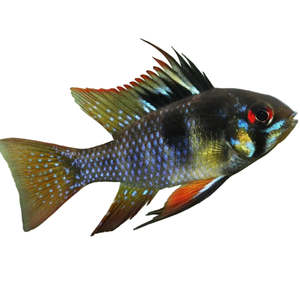
The a striking colour morph of the popular German Blue Ram, featuring deep charcoal to jet-black body tones with subtle iridescent highlights. Compact, intelligent, and full of personality, this dwarf cichlid is ideal for well-maintained planted and aquascaped aquariums.
Dark Knight Rams are peaceful by cichlid standards and do best in calm community setups with stable water conditions. When settled, they display fascinating behaviour, strong pair bonding, and impressive coloration. Physical Characteristics:
Adult Size: Approximately 5–7 cm (2–2.75 inches)
Coloration: Dark grey to black body with subtle blue iridescence
Body Shape: Compact, laterally compressed
Sexual Dimorphism:
Males often have slightly longer dorsal fin rays
Females are rounder, especially when mature, and may show a faint pink belly Behaviour & Temperament:
Temperament: Peaceful to semi-peaceful
Tank Level: Bottom to mid-water
Territorial Behaviour: Mild, mainly during breeding
Activity Level: Calm and observant Suitable Tank Mates:
Peaceful tetras
Rasboras
Corydoras catfish
Small peaceful plecos
Other calm dwarf cichlids (with space)
Avoid:
Aggressive cichlids
Fast, boisterous fish
Fin-nipping species Breeding Information:
Spawning Type: Substrate spawner
Breeding Setup:
Flat stones or broad leaves for egg laying
Warm, soft, slightly acidic water
Parental Care: Both parents guard eggs and fry
Notes: Territorial behaviour increases during breeding Special Considerations:
Sensitive to poor water quality
Requires stable temperature and regular water changes
Best kept in mature, well-cycled aquariums
Colour intensity improves with high-quality diet and low stress Aquarium Requirements
Minimum Tank Size: 60 litres (larger recommended for pairs or community tanks)
Water Temperature: 26–30°C
pH Range: 5.5–7.0
Water Hardness: 2–8 dGH
Substrate: Fine sand
- Decor: Live plants, driftwood, shaded areas
Filtration: Gentle to moderate
Lighting: Moderate Diet & Feeding
Diet Type: Omnivore
Recommended Foods:
High-quality flakes or micro pellets
Frozen foods such as daphnia and brine shrimp
Occasional live foods for conditioning
Feeding Frequency: Once or twice daily in small portions
Product Photo is for reference on, Exact size and colour may vary, if required, please feel free to for exact photos prior to purchase.