
Mini Orchid - Phaelanopsis amabilis - .5L / 8cm / Pick Up In Store Only (Copy)
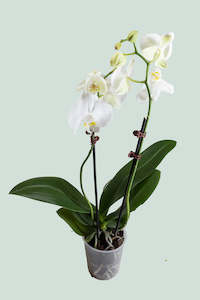
Available In Store Only. The Phalaenopsis are incredibly low maintenance plants if you work with their natural rhythms to find the right position in your interior space.
These beautiful little battlers of the tropics just need a seasonal holiday to look their best after a hard year at work. Not usually fans of air-conditioned offices, these Moth Orchids like to nest at home in a warm spot near a window. Why? Learn how to get your orchid to re-flower below.
Light Requirements: Bright Indirect Light is essential for blooms and growth.
Moisture & Soil Requirements: Water regularly in summer, allowing excess to drain away entirely.
Reduce watering frequency in autumn-winter and increase in spring-summer. A rough monthly guide is to 2-4 times in winter, gradually increasing to 4-8 times in spring-summer. However, each location will require its own nuanced watering schedule. C an survive going dry. This plant stores water in leaves and roots so does not respond well to too much water - in particular when the leaves are left with moisture on them. Pat dry your Phaelanopsis leaves to minimise risk of fungal or bacterial infections.
Growth & Nutrients: Epiphytic (grows on other plants) in nature and has a root system that seeks out surfaces to cling to but prefers a cosy small plastic container. Suits apartments or homes of any size. Feed with a specialist liquid orchid fertiliser at the start of spring each year to late summer when growth slows down.
Temperature, Humidity & Ambient requirements: Prefers warm environments inside and adaptable for nearly any situation, tolerates a range of humidity levels. Keep above 15C.
Toxicity: Non-toxic to pets and people.
Phaelanopsis Orchid Flowering:
Think of your orchid like an elite athlete; they perform well at their peak during the season but need an offseason to recover then work towards next season.
Making a mega flower spike is a massive effort for these little guys so your orchid must go through a selection of seasonal changes in order to replicate the tropical dry & wet seasons of their natural habitat. You can artificially lower the temperature for a fortnight to trigger a flower or you can let nature take its course and let your house create this change. Once this cycle is replicated, it should trigger flower spikes to grow in spring & summer in homes in temperate regions.
Room selection and placement proximity to a window is key. Choose a room to overwinter your Moth Orchid where it won't get as much artificial heat as other rooms in your house during winter. A bathroom, laundry or spare bedroom is a good place to let the seasons impact your Phaelanopsis. Place your orchid within a metre of a window in this room so it experiences bright indirect light as well as natural temperature from the transferral of heat through the glass window. Ensure no harsh direct sunlight reaches it and keep it above 15 degrees Celcius.
If you have the right winter position, you just need to adjust your watering frequency and fertilising now that the temperature and light changes will happen naturally. Reduce watering frequency in autumn-winter and increase in spring-summer. A rough monthly guide is to 2-4 times in winter, gradually increasing to 4-8 times in spring-summer. However, each location will require its own nuanced watering schedule. If your winter position does not produce a flower spike by December, or you want to trigger it earlier, move to a warm and bright position elsewhere in your house. Add dilute liquid orchid fertiliser to your watering as directed on the bottle and ensure all excess water drains away from the roots every time.
Your plant is more likely to flower when the roots are constrained in a small container and the flower spikes appear at the junction between leaves. They are easily distinguished from new roots by their green segments and sharper appearance. Keep your plant in the same position until your flowers are open
Once your flower is finished after 1-3 months, cut the spike as high up as you can so that there are no smaller flower stems, just the main spike with a few nodes present below the cut. You have a good chance of a second or third flower spike emerging from these nodes, and flowering in the same season, once the original flowering section has been removed.
- Store:
- PlantHouse
- Price:
- $30