
Automatic Water Softener AWS (Microprocessor)
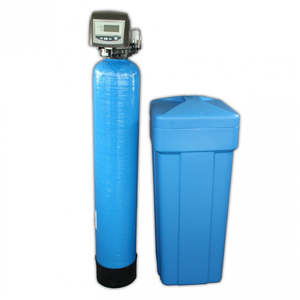
Light commercial or industrial 150 lpm
Hardness (Total):
Primarily caused by calcium and magnesium compounds. Normally expressed as CaCO in concentrations of mg/L (or parts per million - ppm). Water above 150 mg/L is considered hard; above 300 mg/L is considered very hard. 3 Water Hardness is quite common in mountainous regions (caused by the leaching of sedimentary rock) and in areas with limestone formations. It is quite often referred to as “lime in the water".
Excessive Hardness may lead to scaling of pipes and fittings, cause blockage of safety relief valves and heating elements to “burn out" in hot water cylinders and dishwashers. In areas with very hard water, it is not uncommon to render a new dish washer unserviceable within twelve months.
Scale build up can markedly reduce heating efficiencies by up to 90%.
Hard water will make detergents and soaps difficult to "lather up" and may leave a "slimy" feel on the skin.
Washed clothing may feel "starchy" and colours will fade quicker than normal. Clothes washed in hard water tend to have a reduced useful life due the abrasive nature of the water.
When hard water used to wash glassware, windows and vehicles drys, it tends to leave noticeable white streaks of calcium.
There are no known adverse health effects from drinking hard water.
Hard water problems are easily resolved by using a water softener which removes the calcium and magnesium content. Brine Tank:
During the regeneration process (Backwash), the brine is drawn up from the tank and a chemical exchange occurs so that the softener is recharged and maintains its ability to soften. The last part of the Backwash cycle is to put the correct amount of water back into the brine tank in preparation for the next cycle (tank should never be more than ½ full of water). The tank can be filled to the top with common coarse salt and if water becomes visible, add more.