
Coir Mat
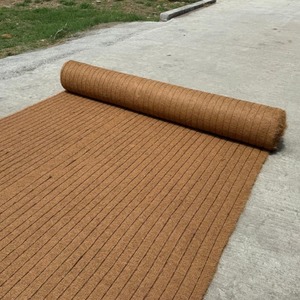
Coir mat is made from the natural fibres found on coconut husks - one of the toughest plant-based materials available. It locks soil in place, retains moisture, and shields the ground from wind and heat, giving seeds the stable environment they need to germinate and establish. Reliable Erosion Control on Slopes, Banks and Waterways
Coir matting performs well in demanding conditions. On embankments, steep slopes, riverbanks, lake shores, landfill sites, and coastal areas, it holds disturbed ground together while new vegetation takes root. Even in fast-flowing water - creeks, drains, and stormwater channels - the open-weave structure stays anchored and maintains its integrity over time. Outlasts Jute. Breaks Down Naturally.
Coir mat lasts 2–5 years outdoors, significantly longer than jute alternatives. It resists rot, mould, and saltwater without any chemical treatment. Once vegetation is established, the mat gradually biodegrades and becomes part of the soil - no removal required, no waste left behind. Light, Fast and Easy to Install
The lightweight construction means less labour on site. Rolls are easy to handle, cut, and pin into place - reducing installation time and keeping project costs down. Available in 300gsm and 450gsm weights to suit different site conditions and erosion risk levels. Also Available: with Jute Threading
For sites that need extra early-stage stability, coir matting with jute threading adds a second layer of performance. The jute threads bind the mat firmly to the ground while plants establish, then break down alongside the coir once vegetation is secure. This version also acts as a roll-on mulch - it traps soil moisture, regulates temperature, and suppresses weeds. You can cut planting holes directly through the mat, making it practical for revegetation and planting projects without removing the matting first. Product Features
- Available in 300gsm or 450gsm
- 100% natural and biodegradable
- Naturally strong coconut fibre
- Excellent ground erosion control
- Resistant to rot, mould, and saltwater
- Suitable for slopes, waterways, revegetation, and coastal sites
- Light and easy to install
- Lifespan: 2–5 years outdoors
- Also available with jute threading for enhanced ground stabilisation and mulching Step-by-Step Installation Guide To properly anchor a coir-jute mat on a slope or garden bed, follow the professional industry installation method:
Top of Slope ┌───────────────────────┐ │ 📥 150mm Anchor │ Clear the slope of large rocks, roots, and existing woody weeds to ensure the matting can tightly contour to the soil face. If you are seeding the area, apply the loose seed and fertilizer directly onto the bare dirt before laying the fabric.
- Dig an Anchor Trench: Dig a 150mm to 200mm deep trench along the very top edge of your slope.
- Secure the Top: Lay the edge of the matting into the trench and fasten it securely using metal U-shaped landscape staples spaced roughly 300mm apart. Backfill the trench with soil and compact it down firmly.
- Roll Down the Slope: Unroll the matting vertically down the hill (in the direction of water flow), never horizontally across it. Overlap any adjoining parallel fabric lanes by at least 100mm to prevent water from cutting channels between the seams.
- Pin the Face: Drive metal U-pins (typically 150mm to 300mm long depending on how loose your soil is) across the face of the mat using a rubber mallet. Use 2 to 3 pins per square metre , and place them every 500mm along the overlapping seams.
- Plant Through the Fabric: Use heavy-duty shears to cut an "X" or "H" slit directly into the matting wherever you want to place a shrub or tree. Peel back the flaps, dig your hole, insert the plant, tuck the flaps back down, and water heavily.