
Pirastro Rosin - Eudoxa
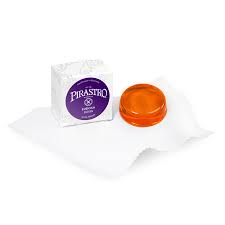
Sound profile Warm, natural, and unhurried.
Eudoxa Rosin produces a warm, natural tone that honours the resonance of gut strings. The light grip means the bow moves smoothly across the string without adding noise, allowing the organic quality of gut to come through fully. It suits period performance, chamber playing, and any player who values tonal richness over projection.
How to use Getting the most from it.
- Apply very lightly. This is a soft rosin and deposits quickly. A few gentle strokes before playing is enough.
- Pairs specifically with gut strings. It will work on synthetic-core strings but may feel lower in grip than expected.
- Wipe strings and instrument top gently after each session. Gut strings are more sensitive to rosin dust than synthetic ones.
- Handle the cake by the cloth; oils from skin contact degrade the rosin surface over time.
Care and storage Keep it in good condition.
Soft rosins are more temperature-sensitive than harder types. Store the Eudoxa rosin in a cool, dry place away from direct sunlight. Avoid leaving it in a warm instrument case or car. The elastic tie keeps the cloth secure around the cake; make sure it is wrapped before storage.
Questions Common questions.
Does Eudoxa rosin only work on gut strings?
It was designed for gut strings and performs best with them. The light formula is calibrated for gut's elasticity and warmth. It will work on synthetic-core strings, but those players may find the traction lighter than they prefer.
How often should I apply rosin?
Very lightly and infrequently compared to harder rosins. A few strokes before playing is usually enough. Over-application with a soft rosin produces a heavy, sticky response.
Does rosin have a shelf life?
Rosin lasts for years when stored properly. Soft rosins can become more prone to cracking in cold conditions or more prone to softening in heat. Keep it at a stable room temperature for the best longevity.
Can rosin cause allergic reactions?
Most rosin contains colophony. Wipe rosin dust from strings and the instrument after playing to reduce exposure. If you experience sensitivity, a hypoallergenic alternative such as Mabsa Honey may help.