
GEWA Tourte Violin Shape Violin Mute
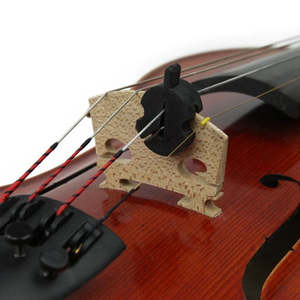
Sound profile Veiled, soft, orchestral.
Like all Tourte-style mutes, this one clamps the bridge to reduce vibration transmission, softening volume and filtering some upper harmonics. The result is the warm, hushed tone typical of con sordino passages in orchestral and chamber music. It is an orchestral mute, not a practice mute: the sound is reduced, but you will still be heard in a quiet room.
How to use On, off, and parked.
- To mute, slide the mute from its resting place on the strings toward the bridge until the prongs grip the A and D strings over the bridge top.
- To unmute, slide the mute back along the strings toward the tailpiece. It will sit there between the nut and tailpiece without falling off.
- The violin shape profile allows the mute to sit close to the bridge without touching the body of the instrument.
- Keep the mute on the strings whenever you are not in the case, so it is always within reach at a moment's notice.
Care and storage Simple and long-lasting.
Rubber mutes require minimal care. Wipe with a dry cloth to remove rosin dust. Over many years, rubber can harden and lose flexibility; if the mute no longer grips the strings firmly or feels brittle, replace it. Store with the instrument or on the strings; there is no separate case required.
Questions Common questions.
When do I use this mute?
Use it when your music says "con sordino" or when a conductor asks for muted playing. It is an orchestral mute for performance and rehearsal, not for quiet home practice where you need significant volume reduction.
What is the difference between this and a practice mute?
An orchestral mute like this one softens the tone and reduces volume moderately, producing the characteristic veiled sound used in con sordino passages. A practice mute is much heavier and reduces volume dramatically for quiet home practice. They serve different purposes and most players own both.
Can this mute damage my bridge?
A rubber Tourte mute used normally will not damage a well-fitted bridge. Avoid leaving it clamped tightly on the bridge for extended periods when you are not playing, as sustained pressure on the bridge feet is best avoided regardless of mute type.
How do I clean the mute?
A dry cloth is all that is needed. Avoid soaking or using solvents, which can degrade the rubber over time.
- Store:
- Symphonia Group
- Price:
- $6