
One Technique - 4 Different Looks
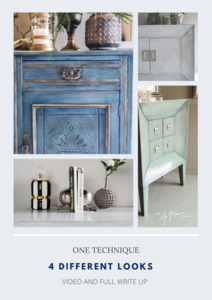
Learning one simple Artisan Paint technique can open the doors to a myriad of Artisan paint finishes. With the wide range of crafted artisan colours available, 67 to be exact means you can combine and adjust the colours and create a colourway to suit your interior space. Today we want to highlight how one simple technique, can be used to create 4 different looks and more.
First let's take a look at the following Video showing a basic Artisan paint, wash and lacquer in Ruby Glass in action, and then how this can be interpreted in different colourways. Then below we will talk about how this works with different colours and colourways.
Looks pretty simple right, it is! a few key pointers below for you before we delve into it further.
What can I create this finish on?
The finish was created with our Premium Chalk Paint range which means with it's unique ability to adhere to pretty much any surface without sanding or priming allows you to create this finish on pretty much any surface.
Paint Messy
Our Premium Chalk Paint has a FLOWplus technology which means it will allow you to brush and keep brushing over it to perfectly create your texture and in this case you want to paint in every which way with your Staalmeester series 2020 to create your texture. Don't paint one way, don't paint neat, paint a little messy. do-able right?
Make sure your base paint finish has good full coverage, as this base needs to be worked further. 2 good coats is required then leave to completely dry. With Premium Chalk Paint we're talking anywhere from 30mins to 1 hour depending on the environment.
Create your Wash
A wash is in basic terms a diluted premium chalk paint colour that will allow you to create a gentle hue and semi transparent layer of colour
Dilute and create your wash in your premium chalk paint colour of choice, bearing in mind that if you have a lighter base like an Artisan white and your wash of choice is as an example is a dark grey; start off with a high dilution with water to make your wash more subtle to start with. In general darker colours will need to be diluted more to be subtle and suitable over a light colour but if you want a strong darker coloured wash to overpower a strong base colour then dilute it less. No nasties, when it comes to diluting and creating your wash. Just simply add water to your premium chalk paint colour to create a runny dye like consistency
TIP: Mix your wash and then try it out on your paint finish first to gage what it will look like , then adjust to suit if needed by adding more paint or water and reapply to test it out.
Brush your wash on and rag off blending as you go TIP: Make sure your rag is white, lint free and that it's been folded into a smooth pad, if your rag is wrinkled in your hand you will transfer those wrinkles in your wash effect ( unless that is the intention)
TIP: If you find your wash is too strong in areas on your piece or you want to highlight areas so that the base colour comes through more; simply dip your brush in plain water and brush over the area you would like to lighten/remove and wipe back, this works like an eraser allow you to work the wash effect until you are happy with it
GLOSS LACQUER
When you apply Artisan lacquer everything is sealed and set but until that point you can work the paint effect until you are happy. Apply your Artisan gloss lacquer either with a Staalmeester roller or flat brush keep this linear and neat. For a seamless gloss look apply 2 coats of gloss lacquer as you are bound to miss areas on the first coat. Keep each coat nice and thin.
NOW that we've run through the basics of the technique and some tips we have some examples below to show; you are not limited to just one wash. With this one technique you can do multiple colour washes over each other for different effects so lets take a closer look
White and bright with depth and gloss
To Recreate this:
TIP: When doing multiple washes, make sure each wash is bone dry before you do the next one, a secondary wash should be mixed to be a little stronger to allow it overpower the primary wash if it is a lighter colour/netural.
In this case highly diluted Clubhouse grey to be a subtle wash over Beluga white. Focus on the areas you want to create shadow and make stronger in this wash like edges and corners. At this point your piece may be looking a little grey, but once you do you your next wash in Crisp White it will whiten back up again. In order for your crisp white wash to b
- Store:
- Taylored Revival