
Cryptocoryne 'Green Gecko' Tissue Culture (Aquascaping Essentials)
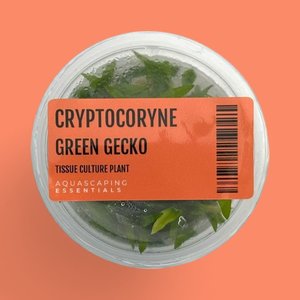
Cryptocoryne 'Green Gecko' is a striking rosette plant known for its vibrant and unusual colouration, ranging from bright green to warm bronze with distinctive variegation. A cultivated variant of the well-known Cryptocoryne wendtii, 'Green Gecko' adds a unique splash of colour and texture to any aquascape, making it a standout choice for both natural-style and contrast-heavy layouts.
This tissue culture version is grown in sterile lab conditions, free from algae, snails, and other unwanted pests—ideal for aquarists seeking a clean and safe plant introduction. Its compact, bushy growth habit makes it particularly well-suited for midground placement, or even in the foreground of larger tanks.
Cryptocoryne 'Green Gecko' is hardy and easy to care for. It adapts well to a wide range of conditions and grows slowly but steadily under low to medium lighting. Like other Crypts, it may experience brief melting during initial planting, but it recovers quickly and rewards patience with strong, vibrant foliage. Key Features
- Striking green to bronze colouration with natural variegation
- Compact rosette form ideal for midground or foreground placement
- Tissue cultured for a pest-free, algae-free start
- Low maintenance and tolerant of varied water conditions
- Safe for shrimp and sensitive livestock
Care Instructions
- Lighting: Low to medium lighting is sufficient. Higher light may result in more compact growth.
- CO₂: Not required but beneficial for faster growth and vibrant colouration.
- Fertiliser: Use root tabs or a nutrient-rich substrate for best results.
- Water Parameters: pH 6.0–7.5, temperature 22–28°C.
- Growth Habit: Like many Crypts, initial melt may occur but it will regrow and settle well over time.
- Trimming: Minimal—can be left to grow naturally or pruned for shape.
How to Plant Tissue Culture:
- Remove plant from cup and rinse off the nutrient gel under clean water.
- Use aquascaping scissors or tweezers to divide the plant into small clumps.
- Plant directly into aquarium substrate using tweezers.